
What fonts go with Work Sans? This functional grotesque brings workhorse reliability that demands companions capable of leveraging its practical character while providing meaningful visual contrast.
Work Sans was designed by Wei Huang as a typeface optimized for on-screen text usage. Drawing inspiration from early grotesques like those used in 19th-century advertising, the design features slightly condensed letterforms that maximize content density without sacrificing readability. The family spans nine weights from Thin to Black with matching italics, making it remarkably versatile for interfaces, branding, and editorial work where functional clarity serves the content.
Pairing Work Sans means finding fonts that either complement its utilitarian spirit or provide meaningful contrast through serif elegance or geometric precision. Its neutral, hardworking character makes it a flexible partner that welcomes both traditional and contemporary companions. Here are 15 fonts that pair well with Work Sans, each chosen to extend its capabilities across different design contexts.
1. Playfair Display

Playfair Display creates dramatic contrast against Work Sans’s practical simplicity. Claus Eggers Sørensen’s high-contrast serifs bring editorial sophistication that elevates Work Sans’s workmanlike character into something more distinguished. The delicate hairlines dance against Work Sans’s sturdy strokes, creating visual tension that energizes layouts. This pairing excels in fashion editorials, lifestyle brands, and any project where utility needs elegance.


2. Merriweather

Merriweather‘s screen-optimized serifs find natural harmony with Work Sans’s digital-first philosophy. Both fonts were engineered for modern reading environments, sharing commitment to legibility across devices and sizes. Eben Sorkin’s sturdy serifs provide authoritative headlines while Work Sans handles body text with unflappable reliability. This pairing suits content-heavy platforms, news sites, and educational content where readability serves diverse audiences.


3. Bitter

Bitter brings slab serif warmth that complements Work Sans’s functional character. Sol Matas designed a serif specifically for comfortable screen reading, sharing Work Sans’s practical sensibility. The combination feels purposeful—two fonts united by commitment to readable functionality. This pairing works beautifully for blogs, editorial platforms, and any project where approachable authority serves the content.


4. Libre Baskerville

Libre Baskerville introduces classical refinement to Work Sans’s utilitarian disposition. Pablo Impallari optimized this Baskerville interpretation for screens while maintaining transitional elegance. Against Work Sans’s grotesque foundations, Libre Baskerville provides intellectual depth that signals substance. This pairing excels in academic publishing, professional services, and any project bridging traditional credibility with contemporary accessibility.


5. Roboto Mono

Technical clarity meets functional design when Roboto Mono pairs with Work Sans. Christian Robertson’s monospace design brings code-ready precision that complements Work Sans’s practical character. This pairing speaks directly to developer portfolios, technical documentation, and digital products where code and content coexist. The systematic precision of Roboto Mono anchors Work Sans’s more flexible proportions.


6. Poppins

The geometric precision of Poppins provides clean contrast against Work Sans’s grotesque foundations. Indian Type Foundry’s creation brings circular geometry that sharpens Work Sans’s more organic forms. Both fonts share commitment to functional clarity while expressing it through different design philosophies. This pairing suits tech startups, SaaS products, and modern interfaces where geometric headlines need practical body text.


You'll love this article!
A visual guide for designers.
7. Lora

Lora brings calligraphic warmth that humanizes Work Sans’s businesslike demeanor. Those brushed curves and moderate contrast create visual dialogue between traditional elegance and modern utility. Cyreal’s contemporary serif adds personality that Work Sans’s neutrality welcomes. This pairing suits lifestyle brands, boutique businesses, and content platforms where warmth enhances user experience.


8. Source Serif Pro

Source Serif Pro creates systematic harmony when paired with Work Sans. Both fonts emerged from thoughtful, systematic design processes—Adobe’s commitment to open-source excellence. Frank Grießhammer’s transitional serif provides classical contrast without overwhelming Work Sans’s functional character. This pairing excels in documentation, publishing platforms, and any project where design consistency serves content delivery.


9. Inter
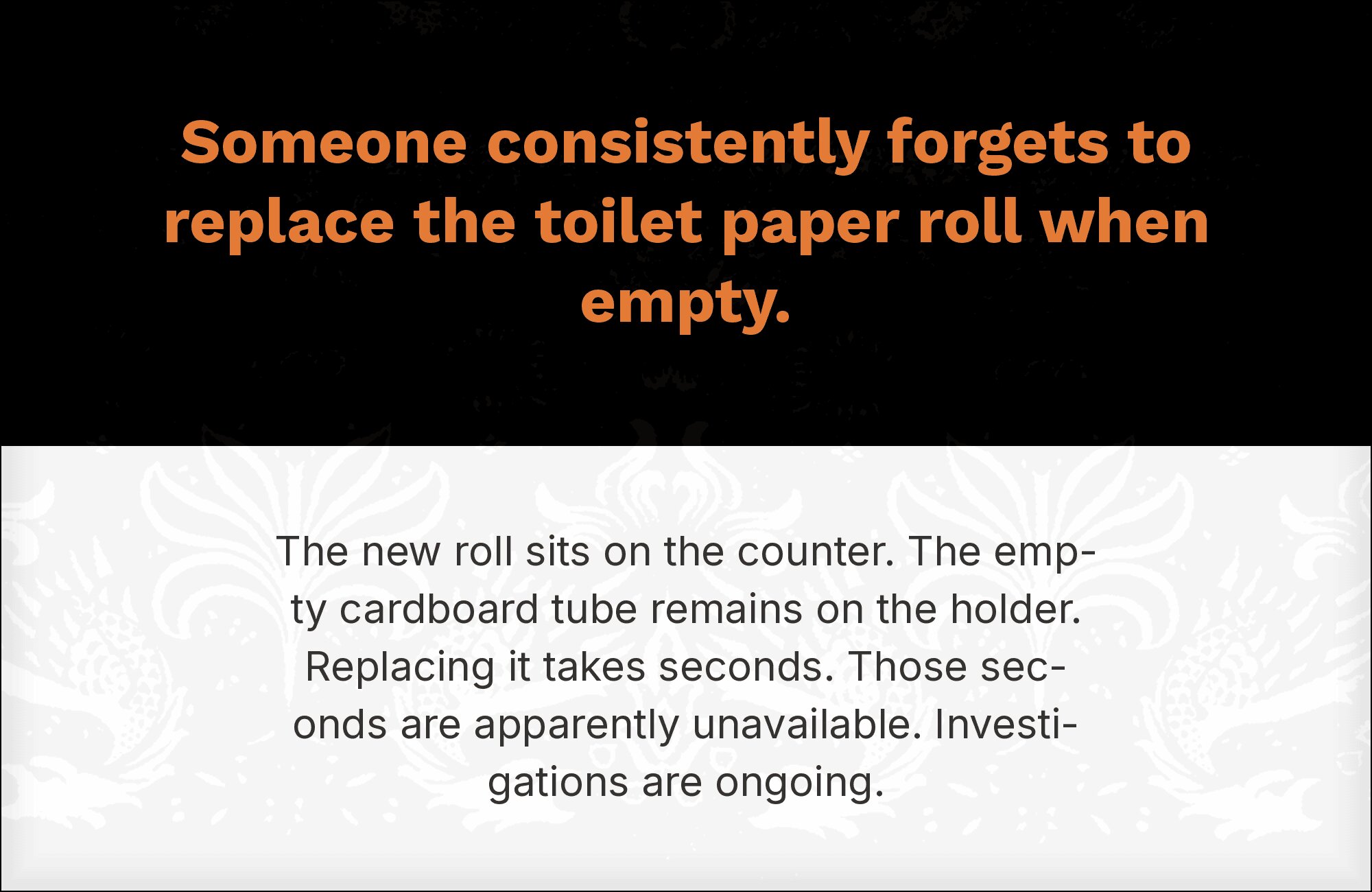
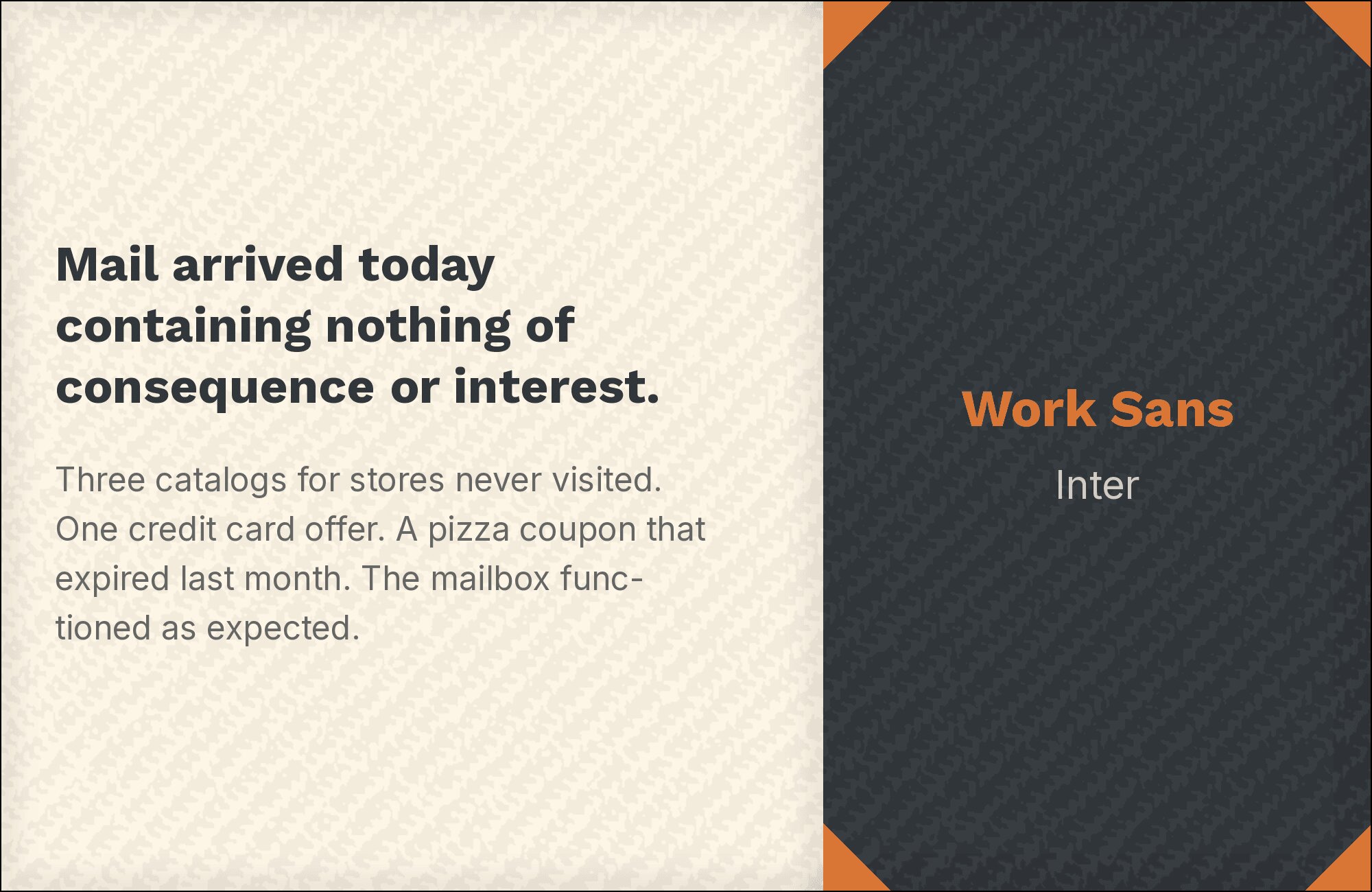
Screen-first meets workhorse when Inter pairs with Work Sans. Rasmus Andersson’s meticulous creation shares Work Sans’s commitment to functional excellence. Both fonts represent modern typography engineering at its finest—making subtle differences in letterforms create enough visual interest for hierarchy. This pairing suits dashboards, applications, and design systems where typographic quality signals software quality.
10. Spectral

Spectral brings literary elegance that elevates Work Sans’s practical character. Production Type designed this serif specifically for Google Docs, sharing Work Sans’s commitment to digital functionality. The result is typography that feels both productive and refined—ideal for publishing platforms, documentation sites, and content-forward projects where elegance serves efficiency.


11. Space Grotesk

Space Grotesk shares similar design heritage with Work Sans—both drawing from early grotesque traditions. Florian Karsten’s design brings slightly quirky character that creates visual interest without disrupting Work Sans’s reliable foundations. Together they create contemporary systems that feel both functional and distinctive, ideal for tech brands, creative agencies, and modern applications.


12. Crimson Text

Crimson Text introduces old-style elegance that creates meaningful contrast with Work Sans’s grotesque modernity. Sebastian Kosch’s design channels classical book typography, bringing literary depth to practical layouts. This pairing suits publishers, cultural institutions, and any project where Work Sans’s functionality needs classical grounding.


13. Manrope

Manrope‘s geometric precision provides contemporary balance to Work Sans’s early grotesque inspiration. Those open apertures and generous x-height create modern contrast that energizes utilitarian layouts. This pairing excels in fintech, professional services, and applications where brands need to signal both innovation and reliability.


14. Alegreya

Alegreya brings dynamic rhythm that enriches Work Sans pairings. Juan Pablo del Peral’s calligraphic design features flowing forms that create lively contrast against Work Sans’s stable geometry. The result is typography that feels both literary and functional—ideal for storytelling platforms, cultural magazines, and editorial projects where text deserves personality.


15. JetBrains Mono

JetBrains Mono brings developer credibility that complements Work Sans’s practical foundations. Designed specifically for coding by the JetBrains team, this monospace font features increased letter height and distinctive ligatures. Against Work Sans’s interface-ready character, JetBrains Mono provides technical authenticity. This pairing excels in developer documentation, coding tutorials, and tech platforms bridging code and content.


Conclusion
There are no absolute rules for font pairing, just principles to guide you. The key is contrast—in weight, in style (serif vs. sans-serif), or in personality. Work Sans is versatile enough to play well with many different typefaces.
Trust your eye, experiment freely, and remember that the best pairing is the one that serves your content and audience. Typography should enhance communication, not complicate it.
