What fonts go with PT Sans? This widely-deployed humanist sans-serif, originally designed for the Russian Federation, combines exceptional linguistic coverage with approachable design that opens many pairing paths.
PT Sans holds a unique place in type history as one of the first public fonts commissioned by a national government for widespread use. Designed by Alexandra Korolkova of ParaType, it was created to establish a unified typographic identity across Russian public communications. The design balances humanist warmth with the clarity needed for official documents, featuring open apertures, distinctive letterforms, and remarkably thorough language support. Its neutral-yet-friendly character has made it popular well beyond its original governmental purpose.
Pairing PT Sans involves leveraging its approachable professionalism. It reads as trustworthy without being bureaucratic, friendly without being casual. Serif companions can add gravitas for formal contexts, while other sans-serifs can create modern systematic combinations. PT Serif offers an obvious family pairing, but exploring beyond the family often yields more distinctive results. Here are 15 fonts that pair well with PT Sans, selected for partnerships that enhance its balanced character.
1. PT Serif

A family reunion where everyone actually gets along. PT Sans and PT Serif share identical DNA in their proportions and x-heights, creating seamless typographic harmony without the usual friction of mixing fonts from different foundries. The serif brings gravitas to headlines while the sans handles body copy with quiet efficiency. This pairing feels inevitable, like it was designed for academic journals, corporate reports, and editorial layouts where credibility matters. The shared Russian origins give both fonts excellent Cyrillic support, making this duo essential for multilingual projects.


2. Lora

Lora‘s calligraphic brushstrokes dance above PT Sans’s steady foundation like poetry floating over prose. The matched x-heights create effortless reading flow, while Lora’s subtle curves inject warmth into otherwise businesslike layouts. This pairing whispers ’boutique editorial’ without screaming for attention. Use it for lifestyle blogs, literary magazines, or any project where you want elegance without pretension. The contrast works because both fonts share humanist roots but express them differently: Lora through italic flourishes, PT Sans through understated geometry.


3. Open Sans

Two humanist sans-serifs walk into a layout and somehow don’t fight. PT Sans brings slightly more personality with its distinctive letter shapes, while Open Sans provides neutral backup in supporting roles. This pairing works through subtle weight choreography: use Open Sans Light for whisper-quiet captions while PT Sans Bold anchors headlines. Perfect for government websites, educational platforms, and healthcare applications where friendliness meets accessibility. Both fonts excel at small sizes, so body copy remains crisp on any screen.


4. Rubik

Rubik‘s rounded corners meet PT Sans’s more traditional humanist forms in a handshake that says ‘approachable professional.’ The slight warmth in both fonts creates cohesion, while Rubik’s geometric underpinnings provide just enough contrast to establish hierarchy. This duo thrives in app interfaces, startup landing pages, and any context where you need to feel modern without alienating traditional users. The similar x-heights keep paragraphs flowing smoothly across font switches.


5. Adobe Garamond

Adobe Garamond brings 16th-century Parisian elegance crashing into PT Sans’s contemporary Russian pragmatism, and somehow they find common ground. The serif’s delicate hairlines and refined contrast create headlines that demand respect, while PT Sans delivers body copy with unpretentious clarity. This is a pairing for book publishers, law firms, and anyone trafficking in serious ideas. The weight differential between Garamond’s refined strokes and PT Sans’s sturdy forms creates natural hierarchy without effort.


6. LTC Bodoni

LTC Bodoni‘s dramatic thick-thin contrast slices through the page like a headline from a 1920s fashion magazine, while PT Sans grounds everything in readable modernity below. This is a high-contrast pairing in every sense: Bodoni’s vertical stress and hairline serifs against PT Sans’s open humanist forms. Perfect for luxury branding, high-end editorial, and any context where you want to command attention then deliver information cleanly. Use Bodoni sparingly as display text; it’s too theatrical for extended reading.


You'll love this article!
A visual guide for designers.
7. Steinbeck

Steinbeck‘s literary character brings a handcrafted headline presence that pairs surprisingly well with PT Sans’s matter-of-fact body copy. Named after the author, Steinbeck carries storytelling in its bones, with irregular strokes that suggest a typewriter ribbon running low. PT Sans provides the utilitarian backdrop these expressive headlines need to shine. Use this pairing for memoir-style blogs, indie publishers, or documentary film credits. The contrast between Steinbeck’s personality and PT Sans’s neutrality keeps layouts from feeling generic.


8. Space Mono

Space Mono‘s fixed-width characters inject a dose of technical credibility into PT Sans’s friendly humanist forms. This pairing speaks fluent developer: Space Mono handles code snippets, terminal output, and data displays while PT Sans keeps the explanatory prose approachable. The x-heights align close enough to prevent jarring transitions. Essential for technical documentation, developer blogs, and SaaS interfaces where you need to toggle between human language and machine language seamlessly. The contrast is functional, not decorative.


9. Tenez

Tenez brings contemporary display type swagger to PT Sans’s workmanlike reliability. The geometric underpinnings of Tenez create clean, architectural headlines that announce themselves without shouting, while PT Sans handles the paragraph-level communication. This pairing works for architecture portfolios, design studios, and any brand that wants to signal ‘we understand modern aesthetics’ without abandoning readability. The weight range in both fonts allows for sophisticated typographic systems with multiple hierarchy levels.


10. Source Serif Pro

Source Serif Pro descends from the same screen-optimization philosophy as many of today’s workhorse fonts, making it a natural headline companion for PT Sans’s body copy. The serif’s moderate contrast and sturdy serifs hold up at smaller sizes than most traditional serifs, giving you flexibility in how you deploy the hierarchy. This pairing feels right for tech journalism, academic publishing, and any context requiring both authority and accessibility. Both fonts perform beautifully on screens, which is increasingly where type lives.


11. Merriweather
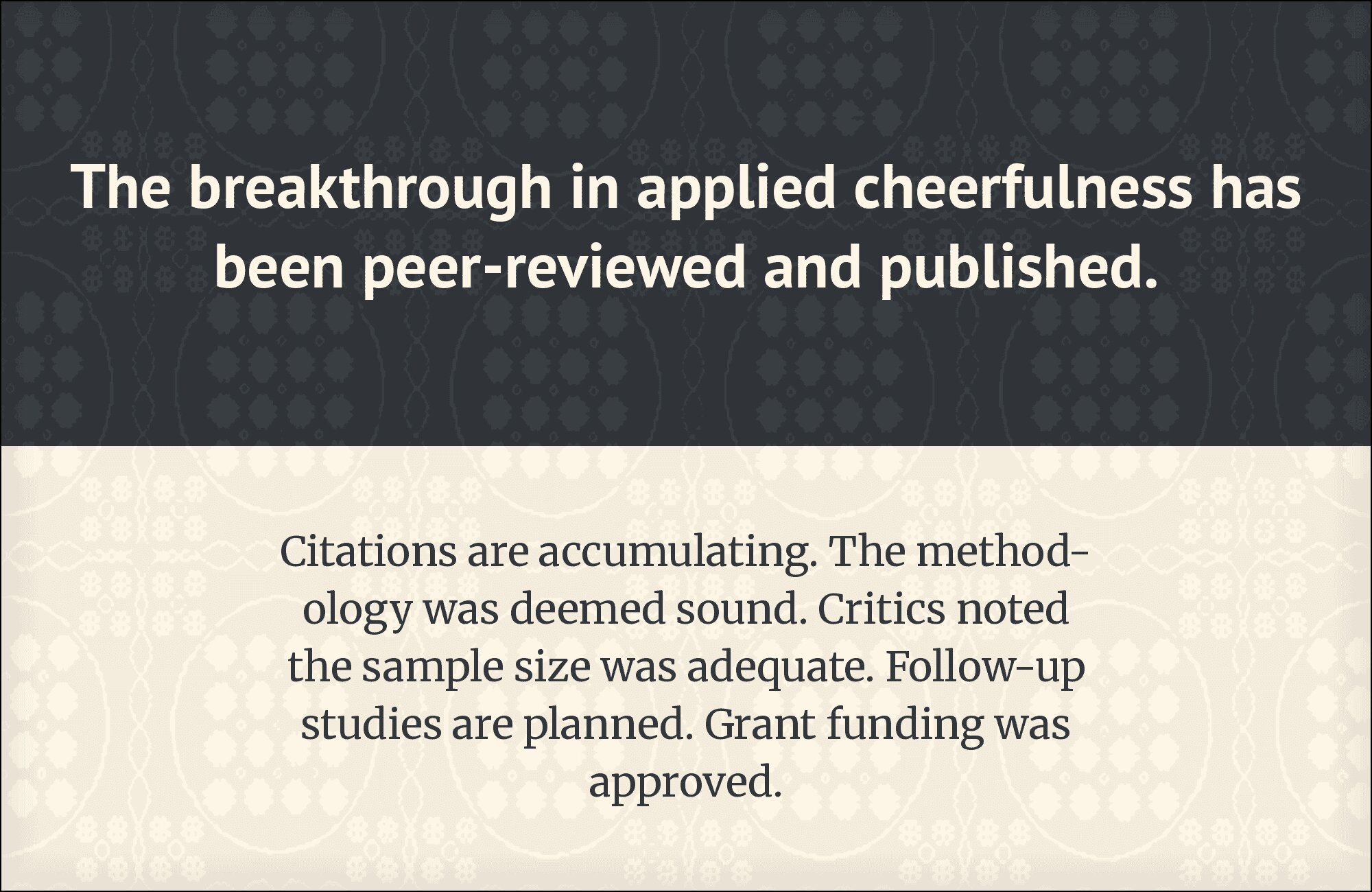
Merriweather‘s tall x-height practically shakes hands with PT Sans’s similar proportions, creating one of those pairings where everything just clicks. The serif’s slightly condensed letterforms and robust details handle headlines with quiet confidence, while PT Sans delivers body copy with open, readable forms. This is a workhorse combination for news sites, long-form journalism, and educational content where readers spend hours with your text. Neither font demands attention for itself; both prioritize the reader’s experience.


12. Playfair Display

Playfair Display arrives in full 18th-century formal dress, its high-contrast strokes and delicate hairlines announcing importance, while PT Sans waits in sensible business casual to handle the actual communication. The contrast couldn’t be sharper: Didone-style elegance against humanist pragmatism. This pairing excels in wedding invitations, luxury retail, and any brand positioning that says ‘refined but accessible.’ Use Playfair exclusively for headlines; its hairlines will disappear at body copy sizes.


13. Crimson Text

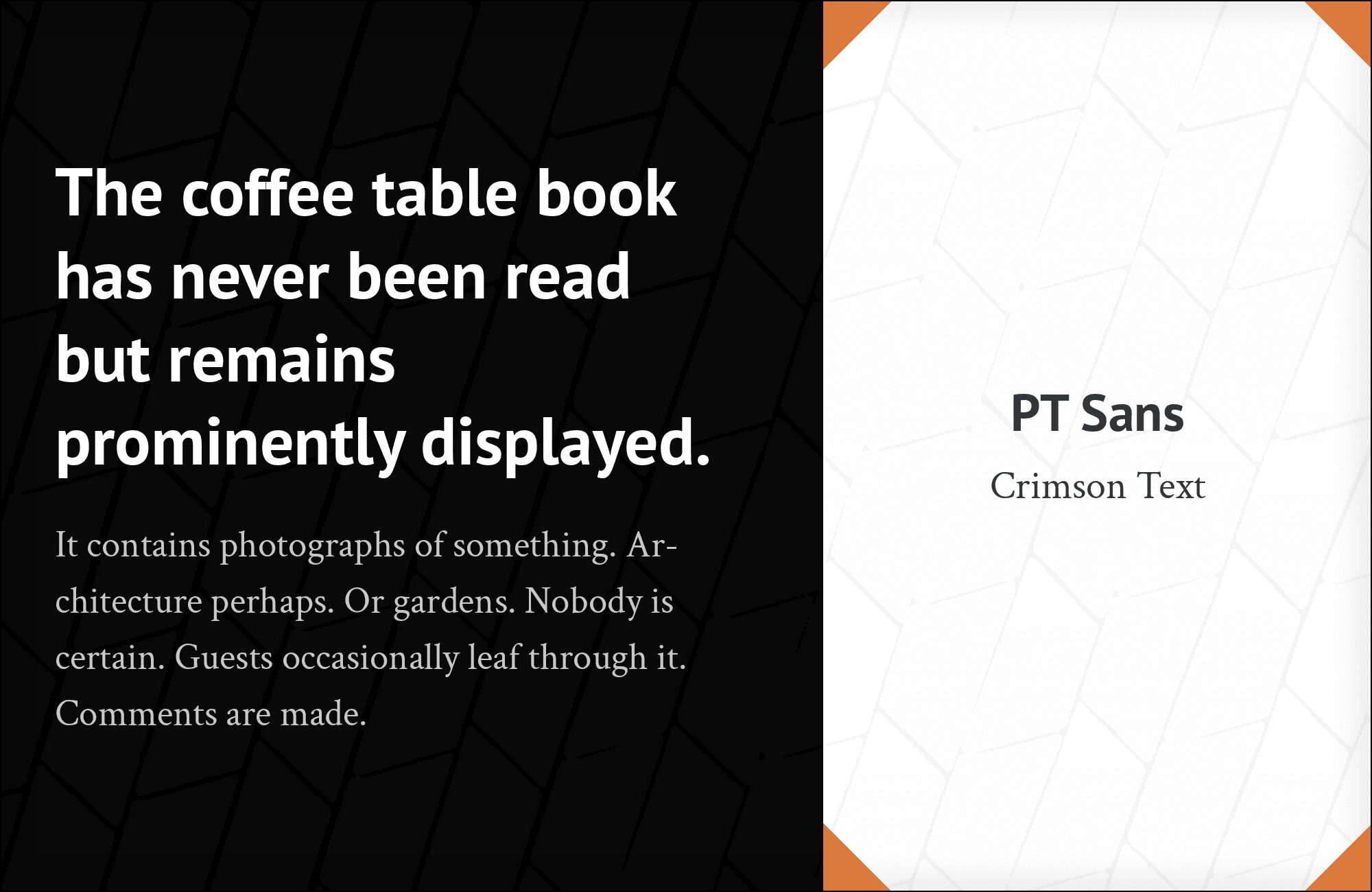
Crimson Text‘s old-style serif forms bring a scholarly warmth that complements PT Sans’s straightforward clarity. The serif’s calligraphic heritage shows in its slightly irregular letter shapes and humanist proportions, creating headlines with personality. PT Sans grounds everything in contemporary usability below. This pairing works for university websites, museum materials, and literary publications where tradition and accessibility need to coexist. The similar x-heights maintain reading flow across font changes.
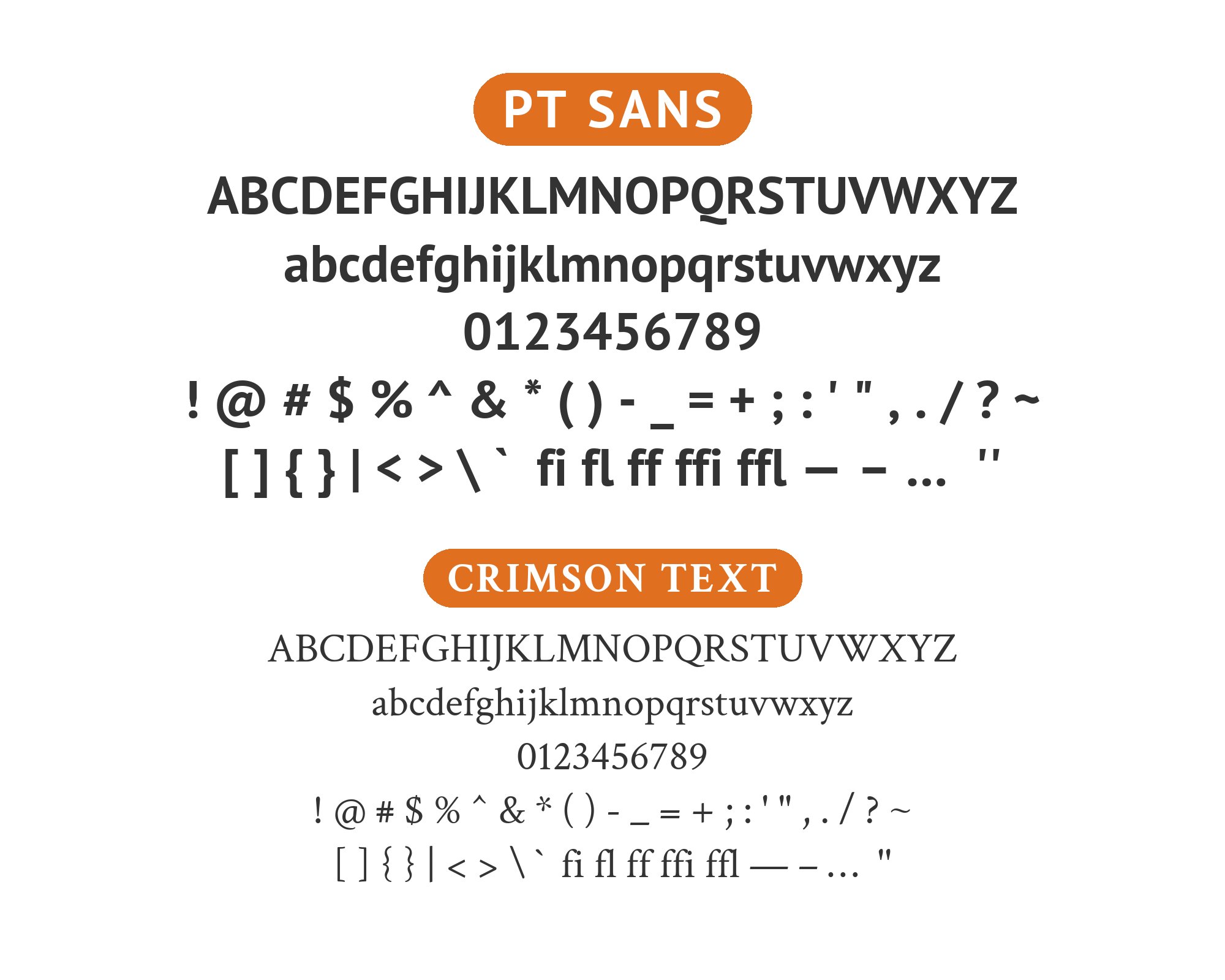
14. Libre Baskerville

Libre Baskerville channels 18th-century English typography with its sharp serifs and refined proportions, creating a distinguished presence that PT Sans’s humanist forms support rather than compete with. The Baskerville’s transitional characteristics place it between old-style warmth and modern crispness, making it versatile for various headline treatments. This duo suits publishers, financial institutions, and anyone wanting to project established credibility. The weight contrast creates clear hierarchy while both fonts maintain strong screen performance.


15. Roboto

Two of Google’s typographic workhorses meet in a pairing that’s more practical than exciting. Roboto‘s mechanical precision and PT Sans’s humanist warmth create subtle contrast, with Roboto often taking headline duties due to its extensive weight range. This combination powers millions of Android interfaces and web applications where functionality trumps personality. Both fonts prioritize legibility at any size, making them safe choices for international audiences and accessibility requirements. Sometimes the boring choice is the right choice.


Conclusion
There are no absolute rules for font pairing, just principles to guide you. The key is contrast—in weight, in style (serif vs. sans-serif), or in personality. PT Sans is versatile enough to play well with many different typefaces.
Trust your eye, experiment freely, and remember that the best pairing is the one that serves your content and audience. Typography should enhance communication, not complicate it.
