I don’t find passion in graphic design, but I’m very interested in it, even after 20 years in the field. It’s always more interesting to do something purely artistic, where solving client problems isn’t a factor. I’m passionate about Fine Art, yet only very interested in Design, enough to keep doing it with a measure of delight after 20 years. It’s much more fun to write a song or sketch a painting concept than it is to analyze a client’s competitor and his branding. But as a designer, I must deliver work with a certain measure of inspiration or else I’ll cease to get work in this field. Right?
If design is not your passion, where do you find the inspiration to deliver great design solutions?
Let’s be honest: getting the job done in graphic design with excellence requires some kind of serious inspiration. I have found that above all things, for me, deadlines are the most motivating of all factors. The job must be done, it must be done right, it must be done on time, it must be excellent, and it must be clever. Pressure provides a great atmosphere in which the necessary creativity can thrive. Listen to what Erik Spiekermann has to say:
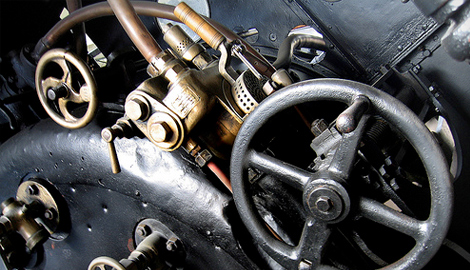
“Pressure…I get inspired by just finally sitting down and looking at a problem, looking at it really deep, taking it apart like we used to take our cars apart as little boys, or as youn adults. And then you look at the parts and think, “oh, this is easy, now I know how it works. Now I know how the carburetor works, because I took it apart.” You put it back together again and there’s always a piece left over, but it always works again. And you’ve learned something. And you grease everything, clean everything up and it works really.”
~ Erik Spiekermann, quoted in Inpsirability: 40 Top Designers Speak About What Inspires, p17
In the end, I solve graphic design problems because I get paid to, because I like having things like food and clothes and a roof over my head. That skill affords me the opportunity to engage in some problems I want to solve for myself, like iPhone apps, books, pro bono design projects for causes I believe in, etc. My interest in graphic design stems right out of my childhood love for art, but when I realized I wasn’t likely going to have an easy time raising a family the way I wanted to on the income of a fine artist—especially an early career one—I found growing appreciation for the trade of graphic design. I have never looked back, and have been designer full-time for about 20 years now.
I connect inspiration directly to getting the job done under pressure. It’s rare I find a job so interesting that I can’t wait to work on it. The most interesting projects are usually my own. Excitement for commercial work does happen, and it happens with regularity, but it is something that regularly happens only a few times a year. I wish it was several times a month, but that is not the case.
Pressure can drive the process
With pressure as my taskmaster, I find that I can make both left and right brains march in step to deliver on-time for a client. I do this, and value this, because it’s the right thing to do when you said you were going to do something. It also helps that I may have signed a contract. And what better way to get the job done that to “take apart the carburetor” while knowing you need the car running correctly in order to get to work?
I think this is why I procrastinate: I create pressure situations in which I know certain thought processes engage from which consistently appropriate design solutions emerge.
Are the results great or good? Honestly, few clients know the difference between bad and good design, even less so between good and great design. I subconsciously always aim for great, but am always content with good, because that’s usually all I have time to hit. A good grid or good source of inspiration are half the battle. But if the budget and timetable was unlimited on a project, I wouldn’t settle for anything but the best. I think even some passion would kick in, knowing I’d be allowed to take a problem as far as my own ability could take me. But how often is this the case in day-to-day business? It’s rare indeed. Time and budget are always short. So I’m quite content with consistently good solutions delivered under pressure and don’t worry about the truly great solutions. Great has a way of showing up when it wants to.
So, pressure is my favorite catalyst to creativity. Not because pressure is nice, but because pressure gets the job done. And graphic design is very much a job: hard but good.

Enjoyed the post Douglas, I certainly find that the pressure of a deadline can get the brain fired up and ideas fall into place just in time to get the work completed. I found what you said about your lack of passion for graphic design interesting, I often feel that way myself because of the pressure that comes with having to make money, though usually a new project will come along and the passion returns. It can be more enjoyable though having the freedom to do something different, such as photography or painting. I can get on with being creative without having to worry about pleasing a client, or working through the usual design processes.
Hi Paul: If I had a scale with passion on one end and apathy on the other, my “high level of interest” in design could sustain a position about 3/4 the way over towards passion.
I think that because I’m an artist primarily, I see design as subset of fine art, and by principle, “less” than fine art since it is a derivative. That’s not a good or a bad thing – it just is that way. And that is fine.
When I hear things like “graphic design is my passion”, I think “gee, you don’t get out much!”. I think that sentiment is more of an external sales pitch than a bonafide interior reality.
I think I could occasionally say I love design, but I’m more comfortable saying I’m perpetually interested in it. I’m never bored with design, either looking at it, talking about it, or creating it. But the reason I rely on pressure to motivate me is because it doesn’t naturally stir up deep emotions in me, like music and art easily do.
So yes, pressure does the trick. 🙂